
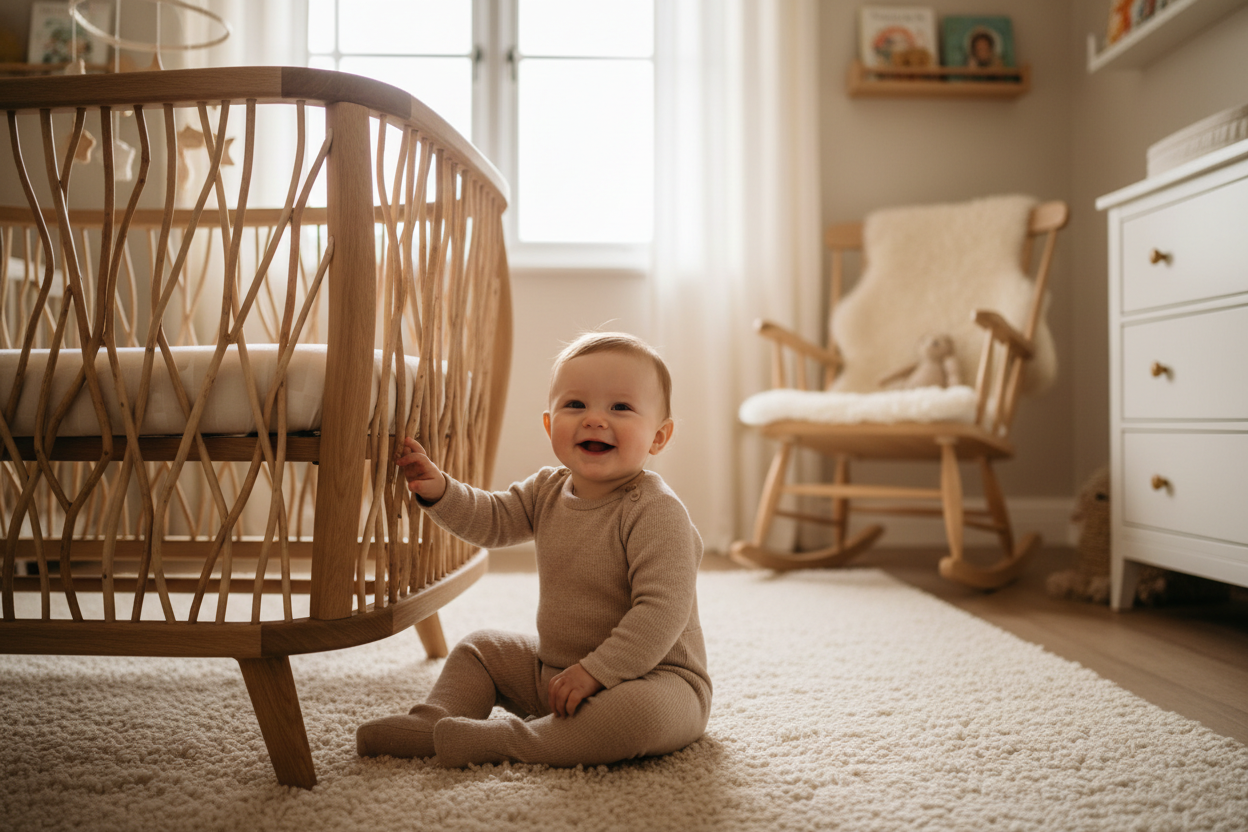
It often feels like you blink and your little one has changed in front of your eyes before you know it. With so much changing so quickly, it can be great to start understanding developmental milestones and how you can support your baby to the fullest.
At Seena, one of the most common questions we hear from parents is when they can expect their babies to sit up on their own. In this blog, we will run through exactly what you need to know about setting upright, the different stages of sitting upright, early signs to look for, and exercises recommended by paediatricians.
When Do Babies Usually Sit Up?
There are several different stages babies will go through before they can fully support themselves and their body weight.
Before a baby can sit up unassisted, there are other developmental steps that have to be addressed first. These steps include:
-
Strong neck and head control: Your little one has to be able to hold their head steady without wobbling. They usually develop this skill and ability through time on their tummy.
-
Strengthened back and core: For a baby to be able to sit up, it requires their muscles to turn on in their spine, tummy, and hips. Movements such as rolling, kicking, and pushing up during time on their tummy will all help to build this strength.
-
Pushing through their arms: During time on their tummy, babies will push up on their forearms or hands. This movement not only aids in strength but also teaches the baby to lift and stabilise themselves.
-
Learning to balance: Before a baby can sit freely, they often practice tripod sitting first, which involves a child leaning forward on their hands to stay steady. As their balance slowly improves, they can remove their hands and sit upright.
On average, babies will begin to sit up unassisted from anywhere between 6 and 8 months, but this is not a strict range and will be different for every baby and their unique learning journey.
If you are ever unsure or worried about your baby’s health and development, it is a good idea to check in with a health nurse or your GP.
Early Signs Your Baby Is Getting Ready To Sit
An early hint that your little one is ready to sit on their own without assistance is when they can manage the aforementioned “tripod pose”. The tripod pose involves the baby's legs out in front and a hand bracing them while they balance. While they perform this pose, you may notice that they hold themselves upright for a brief moment without any support. If you begin noticing this semi-regularly, then it could mean they’re close to sitting independently.
How to Help Your Baby Sit Up Safely
There are many different ways in which you can help your baby to practice their sitting skills, while also keeping the development process natural and supported.
Some tips from the Seena team include:
-
Give Plenty of Tummy Time: As your little one begins to enjoy tummy time more and more, they will slowly build strength within their neck, shoulders and core muscles. A good base of head control is required for unassisted sitting, so tummy time is an essential step to establish this. Health professionals recommend starting tummy time as early as possible in a baby’s life. Initially, integrate tummy time as short sessions, and then gradually increase the amount of time as the baby becomes more relaxed and used to the sensation.
-
Guide Your Baby in Sitting Upright: Once your baby is ready (usually when they are 3 months or older), you can begin to encourage them to start lifting their body from a lying/prone position. Helping to pull them up into a seated position will help in developing their core muscles. Another great exercise is to sit behind your little one with your hands placed gently on their waist or hips. This position gives them stability while still allowing them to do the majority of the work.
-
Practice the Tripod Position: Placing toys within reach of your little one will naturally have them leaning forward onto their hands. This maneuver helps them to learn balance and promote coordination.
-
Toys as Development Allies: Using a baby’s favourite toy, book, or other interesting item that will steal their attention is another great way to encourage independent sitting. Alongside this, placing toys at chest level or slightly to the side is a great way to motivate babies to shift their weight and strengthen their muscles.
-
Stay Away From Propping Too Early: Avoid positions that force them into an upright position before the baby is ready. These positions could include sitting with lots of pillows or using seats for long periods. Babies learn best by moving freely and using their own muscles to foster their development.
Best Exercises Recommended by Paediatricians
Below, we have developed a helpful table of the 10 most highly researched and paediatrician-approved exercises and play activities that help to foster safe and natural development.
|
Exercise |
Why It Works |
How To Do It |
|
Tummy Time |
|
|
|
Side-lying Play |
|
|
|
Supported Sitting |
|
|
|
Tripod Sitting Practice |
|
|
|
Reaching and Grasping Games |
|
|
|
Rolling Practice |
|
|
|
Supported Standing (brief, gentle sessions) |
|
|
|
Floor Play with Minimal Equipment |
|
|
|
Sitting On Your Lap Facing Outwards |
|
|
|
Gentle Pull-To-Sit |
|
|
Does Every Baby Sit Up At The Same Age?
No, every baby does not sit up at the same age, and there is a wide range of individual factors that influence the speed of development for little ones. Generally, most babies will begin sitting upright with little to no support after 6 to 8 months. However, many can start earlier, or later and still be perfectly healthy.
At Seena, some of the most common reasons for variation in the age a baby begins sitting include:
-
Different rates of muscle development
-
Amount of practice through activities such as tummy time and floor play
-
Normal variation, just like adults, babies naturally progress at different speeds
-
Prematurity or medical factors can play a role as well, especially when it comes to natural progression. This would be expected.
Should you be worried at any point then? Well, if your little one still isn’t close to sitting unassisted by the 9-month mark, then it is worth checking in with a child health nurse, paediatrician, or GP. This is more for reassurance's sake, rather than actually for anything concerning. Addressing any gross motor skill issues early on will be easier than having to tackle them later on down the track.

Share:
How To Clean a Mattress
What to Put in Your Nappy Caddy?